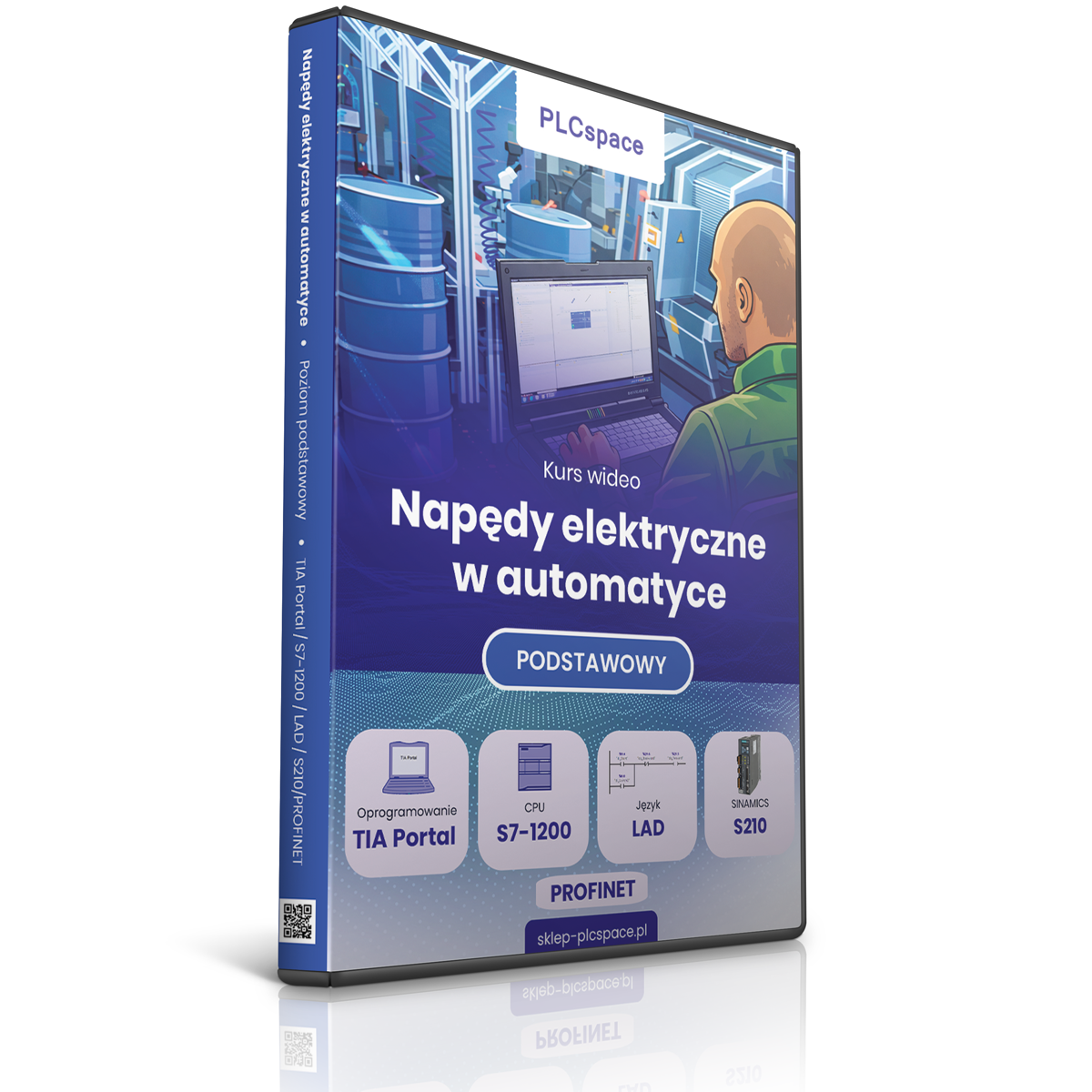
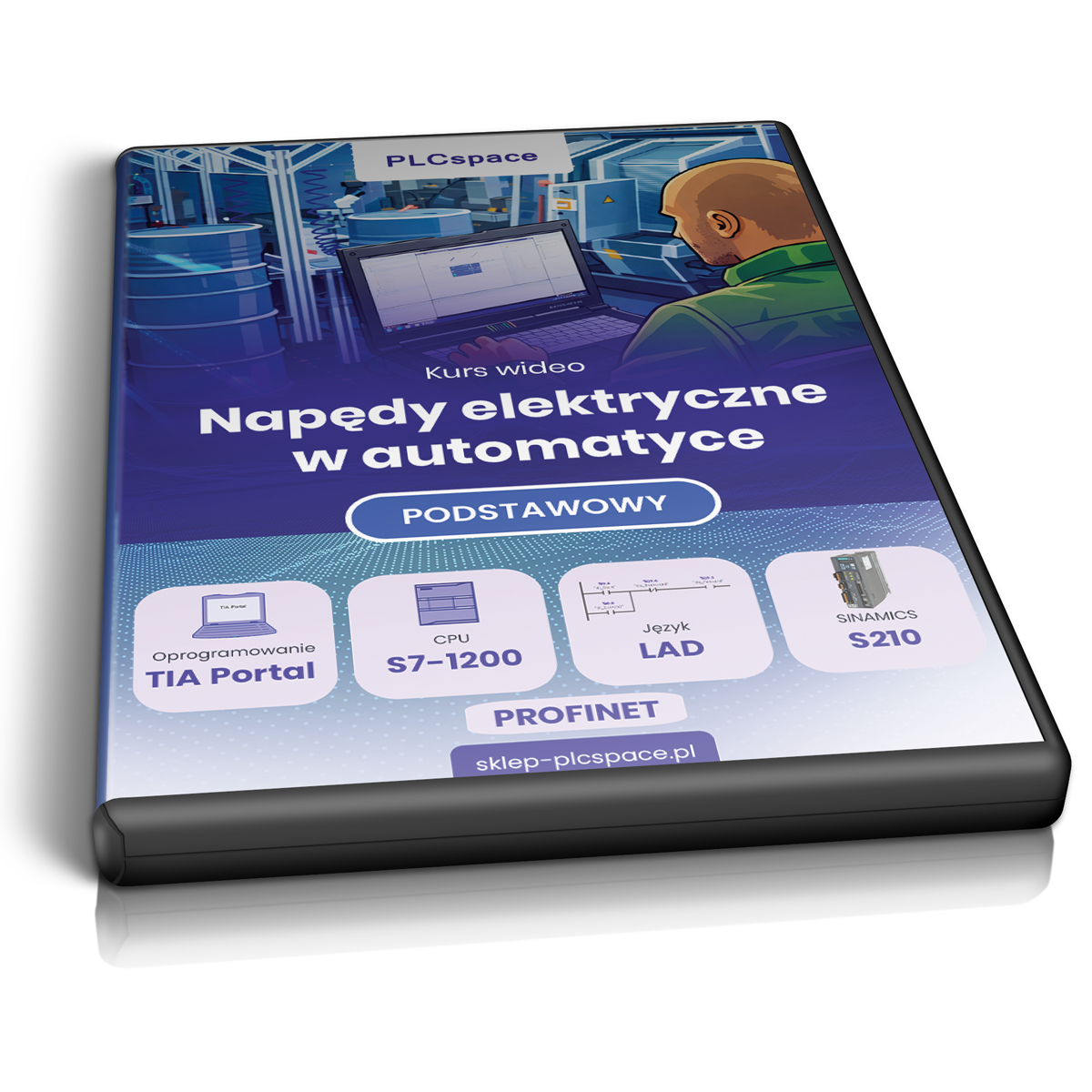

Napędy elektryczne w automatyce

Basic
TIA Portal
S7-1200
LAD
S210
Price

Pierwotna cena wynosiła: 114.27 €.Aktualna cena wynosi: 45.57 €.

Najniższa cena ( 13 February 2026 ): 499.00 
00
Days
:
00
Hours
:
00
Minutes
:
00
Seconds
Course leader
Tomasz Gilewski
Duration 5h
Format Online
VAT invoice Yes
Proforma order Yes
Online delivery Immediately
Payment in different currencies Available

Co otrzymasz po zapisaniu się na kurs "Napędy elektryczne w automatyce"?

Decydując się na swoje pierwsze szkolenie z techniki napędowej, możesz obawiać się, że zostaniesz przytłoczony skomplikowaną wiedzą, podaną w trudny do przyswojenia sposób. Nic bardziej mylnego! Program kursu na poziomie podstawowym koncentruje się na praktycznej pracy ze sterownikiem SIMATIC S7-1200 oraz realnej integracji napędu S210; przy zamówieniu możesz wybrać język programowania LAD/FBD/SCL. Otrzymasz starannie dobrane materiały edukacyjne:

5 godzin nagrań wideo w jakości HD – filmy możesz oglądać bez ograniczeń, online, utrwalając wiedzę oraz rozwiązując praktyczne zadania
Projekty w środowisku TIA Portal wykonywane podczas kursu – zapoznasz się z pełną funkcjonalnością platformy TIA Portal oraz zdobędziesz solidną, praktyczną wiedzę na temat integracji napędu S210 ze sterownikiem S7-1200, w tym z obiektami technologicznymi oraz blokami funkcyjnymi PLCopen.


Kurs techniki napędowej

Szkolenie z techniki napędowej daje praktyczną wiedzę o zasadach działania napędów oraz ich kluczowych komponentach. W trakcie kursu poznasz m.in. różnice między sterowaniem otwartym a zamkniętym, zastosowanie enkoderów absolutnych i inkrementalnych oraz sposoby praktycznego wykorzystania tych rozwiązań w aplikacjach przemysłowych. To intensywny kurs, po którym zrozumiesz pracę napędu S210 w integracji ze sterownikiem Siemens SIMATIC S7-1200.

W wielu systemach automatyki przemysłowej napędy odgrywają rolę niezbędnego elementu — spotkasz je w liniach transportowych, maszynach pakujących, układach pompowych i wentylacyjnych. Aby silnik działał stabilnie i bezpiecznie, konieczny jest przekształtnik częstotliwości lub serwonapęd. Dzięki szkoleniu nauczysz się, jak konfigurować, uruchamiać i serwisować przekształtniki S210, tak aby dopasować parametry procesu technologicznego do wymagań aplikacji.

Kurs podstawowy polecamy osobom, które dopiero rozpoczynają przygodę z automatyką i chcą zdobyć umiejętności w obszarze sterowania napędami, ustawiania parametrów granicznych oraz diagnostyki. Jeśli masz wykształcenie techniczne i chcesz rozpocząć pracę ze sterownikami PLC oraz napędami, ten kurs pozwoli Ci szybko wejść w zadania związane z programowaniem, konfiguracją i uruchomieniami instalacji napędowych.

O czym jest kurs?
Program kursu skupia się na praktycznej obsłudze napędu S210 i jego integracji ze sterownikiem SIMATIC S7-1200. S210 wyróżnia się łatwością uruchomienia, intuicyjną konfiguracją i efektywnością energetyczną. Obsługę, diagnostykę i serwis napędu przeprowadzisz zarówno z poziomu panelu operatorskiego, jak i narzędzi mobilnych.

Nasze szkolenie opisuje typowe zastosowania S210: napędy osi napędowych w urządzeniach transportowych, pompy, kompresory i wentylatory. W połączeniu ze sterownikiem S7-1200 tworzy ono kompaktowe i wydajne rozwiązanie dla mniejszych i średnich instalacji automatyki.

Wszystkie ćwiczenia wykonasz w środowisku TIA Portal, które zapewnia wygodę pracy z projektami SIMATIC i integrację z bibliotekami napędowymi.

Szkolenie daje praktyczne umiejętności i materiały, które umożliwią Ci samodzielne uruchamianie i diagnostykę napędów S210 w środowisku S7-1200. To efektywny start w technice napędowej. Zdobędziesz kompetencje przydatne w realnych projektach automatyki.

Knowledge test:

Is this course for you? Take this test MULTIPLE choice to check it out.

Key information about the course

Preparation for teamwork

Po kursie włączysz się do zespołów projektowych, realizując zadania ze sterownikiem SIMATIC S7-1200 i napędem S210.

You will learn the most common mistakes in PLC programming

Nauczysz się rozpoznawać i unikać typowych pomyłek w programowaniu oraz integracji napędu S210.

You will feel like a real automation specialist

Praktyczne ćwiczenia w wirtualnej fabryce pozwolą Ci trenować rozwiązania napędowe.

You learn from the best

Programujemy skuteczne, efektywne i etyczne rozwiązania. Poznaj dobre praktyki techniki napędowej z naciskiem na sterownik S7-1200 i integrację napędu S210

Why choose this drive technology course in particular?

Na rynku jest wiele materiałów dla osób chcących poznać technikę układów napędowych, ale ten kurs „Napędy elektryczne w automatyce” to coś więcej — praktyczne, skondensowane szkolenie podstawowe, które szybko wprowadzi Cię w realne zastosowania napędów i sterowania. Kurs pokazuje pracę z napędem S210 w połączeniu ze sterownikiem S7-1200. Czego możesz się spodziewać?

Our training will start on every platform Materiał został przygotowany tak, abyś mógł korzystać z niego niezależnie od systemu operacyjnego — Windows 7, 8.1, 10 czy 11. Nie wydawaj pieniędzy na nowy sprzęt — zainwestuj w praktyczną wiedzę, którą od razu wykorzystasz w projektach przemysłowych.
You do not need to buy any additional equipment Kurs realizowany jest z wykorzystaniem symulatora, który wiernie odwzorowuje zachowanie sterownika S7-1200 i napędu S210, dając możliwość wizualizacji i natychmiastowej weryfikacji wyników. To szkolenie praktyczne — od razu sprawdzisz efekty swoich działań w wirtualnym środowisku.
You don't spend money on software Wszystkie ćwiczenia opracowane są w środowisku TIA Portal, które można pobrać i używać bezpłatnie w wersjach edukacyjnych/testowych. Dzięki temu skupisz się na nauce programowania w LAD/FBD/SCL i konfiguracji napędu, a nie na kosztach licencji.
You work in peace and quiet Materiały dostępne są w formie pozwalającej pracować we własnym tempie, bez rozpraszającej grupy. Oglądasz lekcje wtedy, kiedy masz czas; oszczędzasz na dojazdach i organizujesz naukę zgodnie z własnym grafikiem.
You gain practical knowledge Kurs uczy pracy z napędem S210 i jego integracji ze sterownikiem SIMATIC S7-1200 — to umiejętność wysoko ceniona w automatyce przemysłowej. Programowanie i przykłady pokazane tak abyś mógł szybko zastosować zdobyte umiejętności.
No time wasted on notes Materiały są dostępne bez limitu, więc nie musisz zapisywać wszystkiego ręcznie — wracasz do lekcji, projektów i przykładów kiedy chcesz. To wygoda i efektywność nauki.
The course is conducted in the form of a video Możesz wielokrotnie powtarzać dowolne fragmenty, analizować szczegóły i zatrzymywać materiał na interesujących Cię sekwencjach. Dzięki temu szkolenie „Napędy elektryczne w automatyce” daje realny zwrot z inwestycji — szybko i praktycznie podniesiesz swoje kwalifikacje.

Example lesson

Jak wygląda kurs?

Szkolenie „Napędy elektryczne w automatyce” jest dedykowane osobom pragnącym poznać praktyczne zastosowania napędów S210 w systemach automatyki z użyciem sterownika SIMATIC S7‑1200. Kurs na poziomie podstawowym składa się z modułów, z których każdy koncentruje się na praktycznych aspektach instalacji, konfiguracji i diagnostyki napędów S210 oraz ich integracji z systemem sterowania. Kurs został zaprojektowany tak, aby szybko przekazać najważniejsze umiejętności niezbędne w codziennej pracy.

Po ukończeniu szkolenia zdobędziesz praktyczną wiedzę z zakresu programowania i uruchamiania napędów S210 w środowisku TIA Portal z wykorzystaniem sterownika S7‑1200. Program obejmuje obsługę i konfigurację napędów oraz podstawy programowania, co pozwoli Ci natychmiast zastosować zdobytą wiedzę w zakładzie. Zainwestuj w swoją kompetencję — wybierz „Napędy elektryczne w automatyce”.

Lista modułów szkolenia

Part 1 - Preparation
CZĘŚĆ 2
CZĘŚĆ 3
Lista lekcji modułu
0% Porocesu 0/2 Steps
Lista lekcji modułu
0% Porocesu 0/2 Steps
5h Knowledge hours
11 Course modules
441 Satisfied students

Software and hardware used

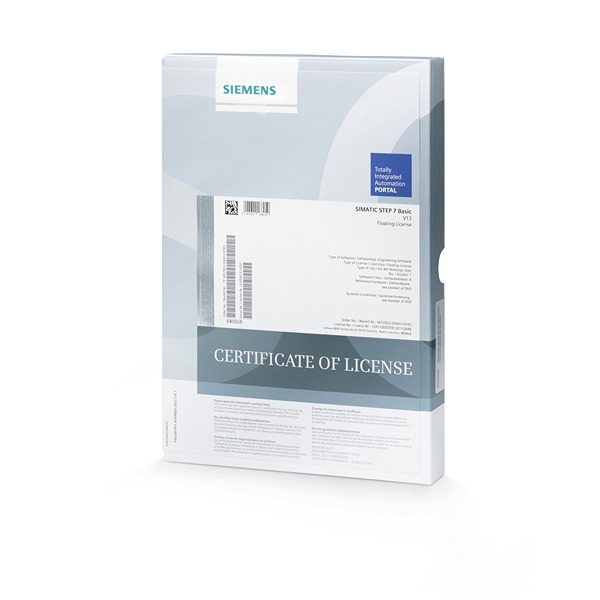
TIA Portal software

Totally integrated automation is a development environment that combines PLC (programming), HMI(visualisation) and startdrive(drive technology).

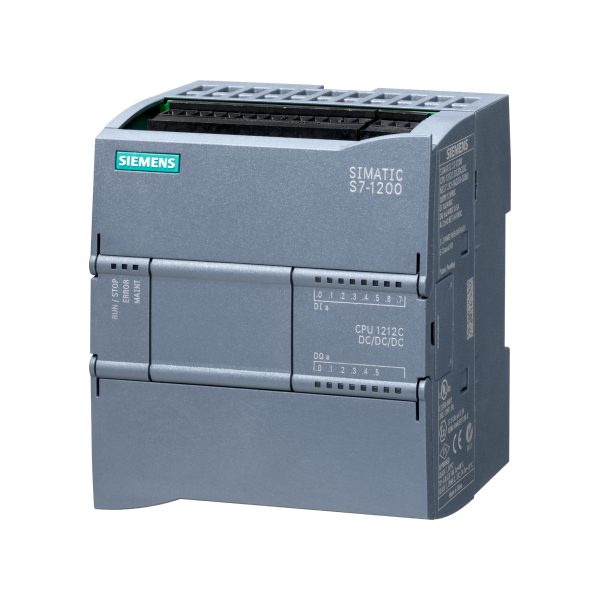
CPU S7-1200

The new controller, which has been developed as a successor to the S7-200, is characterised by slightly weaker parameters than the S7-300 family. Several CPU versions present in the family allow selection according to project requirements.

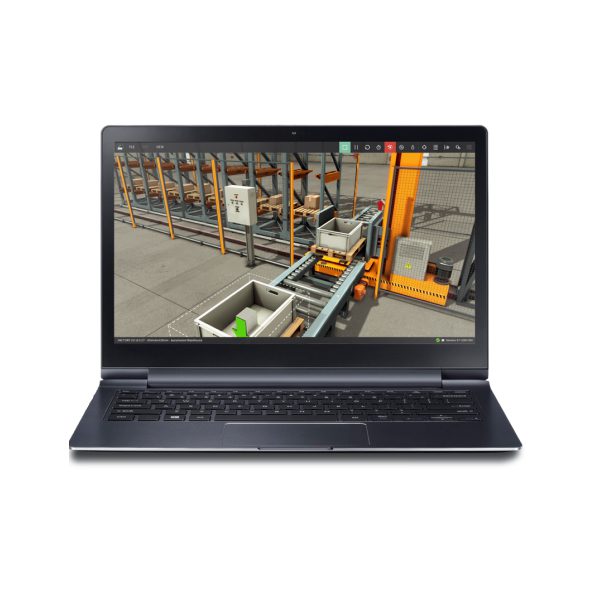
Factory IO

Typical machine scenarios can be run in Factory IO, and the virtual factory connects to the SIM PLC simulator (or the actual PLC. Programming of the controller is possible in the programming environment (depending on the PLC family), and insight into its operation is available during the online connection

What will you be able to do after completing the course?

Myślisz, że praktyczna nauka techniki napędowej jest skomplikowana i zabierze dużo czasu? Nic bardziej mylnego. Na naszym kursie „Napędy elektryczne w automatyce” skupisz się wyłącznie na tym, co najważniejsze — umiejętnościach praktycznych gotowych do zastosowania od razu. Pracujemy na sterowniku SIMATIC S7-1200 z napędem S210. Zobacz, co będziesz umiał po ukończeniu tego szkolenia

Process automation officer Bez trudu zaprojektujesz i wdrożysz nowoczesne rozwiązania napędowe. Dzięki praktycznym ćwiczeniom na S7-1200 i S210 procesy przemysłowe staną się dla Ciebie jasne, a Ty szybko zaczniesz optymalizować instalacje i zwiększać ich niezawodność.
PLC programmer Moduły w szafie sterowniczej, napęd S210 i komunikacja z falownikiem będą dla Ciebie zrozumiałe. Nauczysz się konfigurować urządzenia i programować je w LAD/FBD/SCL, tak by działały sprawnie i pewnie w środowisku automatyki.
Sales Engineer Tylko osoba z praktyczną wiedzą o sterownikach S7-1200 i napędach S210 potrafi rzetelnie doradzić klientowi. Po kursie przygotujesz propozycje dopasowane do potrzeb klienta, budząc zaufanie i zwiększając szanse na finalizację zamówienia.
Product manager Twoje kompetencje w programowaniu i integracji napędów przełożą się na lepsze wyniki sprzedażowe i sprawniejsze wdrożenia. Wiedza o funkcjach Motion Control i diagnostyce pozwoli Ci wprowadzać innowacje i realizować projekty bardziej efektywnie.


Don't waste your time tediously learning rules you will never use. Put your skills into practice - it's a well-known fact that practice makes perfect! Make yourself sought after by employers.

Guarantee
and certificate

If, after 14 days of purchase, you find that it is not for you, I will refund 100% of the course price. Upon completion of the course, you will receive a certificate in two languages - Polish and English.

Frequently asked questions

  • Will I receive a confirmation after my purchase?

    Tak. Po zakupie otrzymają Państwo wiadomość e-mail z potwierdzeniem i dalszymi instrukcjami. Proszę sprawdzić także folder SPAM oraz inne zakładki skrzynki pocztowej, jeśli wiadomość zostałaby tam przeniesiona.

  • Which PLC programming language should I choose when starting out?

    Do wyboru przy zamówieniu są LAD/FBD/SCL (możliwość wskazania przy zakupie). Jeśli są Państwo elektrykami, warto zacząć od LAD lub FBD. Osobom z doświadczeniem w językach tekstowych (C, C++, C#, Java itp.) wygodniej będzie w SCL.

  • Czy ten kurs jest dla mnie, jeżeli nigdy nie używałem napędu?

    Tak. Kurs podstawowy został przygotowany tak, aby osoby bez wcześniejszego doświadczenia z napędami szybko zdobyły praktyczne umiejętności. Materiał obejmuje pracę z napędem S210 i sterownikiem SIMATIC S7-1200, realizowany krok po kroku, co widać również w spisie treści.

  • Can I deliver the course on different computers?

    Tak. Materiał wideo można odtwarzać na dowolnym komputerze lub telefonie.

  • What does the online version of the course look like?

    Po zakupie otrzymają Państwo e-mail z informacją, jak zalogować się na platformę oraz jak korzystać z materiałów. Kurs „Napędy elektryczne w automatyce” jest dostępny od razu po opłaceniu.

  • Co jeżeli podczas realizacji kursu pojawi się jakiś problem?

    Proszę przesłać opis problemu na adres: biuro@plcspace.pl — odpowiemy i pomożemy rozwiązać trudności.

  • What is the access time for the course?

    Dostęp do materiałów jest bez ograniczeń czasowych.

  • Do I need to have any experience with programming?

    Nie. Kurs podstawowy prowadzi krok po kroku przez wszystkie niezbędne zagadnienia. Zawarte są przypomnienia najważniejszych tematów z programowania PLC oraz liczne przykłady praktyczne.


  • Will I need to purchase a licence for the PLC development environment?

    Nie. W kursie znajdują się wskazówki, jak uzyskać niezbędne licencje oraz jak skonfigurować środowisko do pracy ze sterownikiem S7-1200, aby zrealizować materiał bez dodatkowych trudności.

  • Czy jest możliwość zwrotu kursu?

    Tak. W przypadku chęci zwrotu prosimy o wiadomość na adres: biuro@plcspace.pl.

  • Will I need a PLC to deliver the course?

    Nie. Fizyczny sterownik nie jest konieczny — kurs można przeprowadzić na wirtualnym sterowniku. Jeśli posiadają Państwo S7-1200 i napęd S210, materiały pokazują też integrację na sprzęcie, ale wszystko zależy od posiadanego wyposażenia kursanta.

  • How do I buy a course?

    Wystarczy kliknąć przycisk „Dodaj do koszyka”, wypełnić formularz zamówienia i dokonać płatności.

  • When does the course start?

    Dostęp natychmiast po opłaceniu.

Buy as a set and save

Select at least 2 courses from the list and the first free book item (three selections in total) and an automatic discount of 25% will be calculated in your basket.

If you want to find out more about a particular course, click on its name and the page will take you to its offerings.

[ywfbt_form product_id=""].

Companies that have benefited from our courses

Feedback from students

Stanislaw

What sets this course apart is the opportunity to acquire practical, concrete knowledge. Everything is clearly explained. Definitely recommended!

Marcel

After going through the course, I know what the components of the programming environment are and what to do step by step. Now I feel confident and know what I am doing

Leon

Course delivered in a very accessible way. Contains a lot of interesting and useful information.

Michael

I can honestly recommend the course. It is solid and factual knowledge. I will definitely be buying more.

Victor

Thanks to the course, I have decided to go further in this direction. The goal is to look for a more challenging and better job

Peter

The course prepared by Mr Tomasz is distinguished by its high level of content and meticulously prepared lessons. They are planned in a clear and sensible manner, making it easier to assimilate knowledge and return to the material if necessary. An additional advantage is the possibility of a free consultation.

Nikodem

Definitely recommended! The facts themselves, no unnecessary dwelling on issues.

Ignatius

This is my first course, certainly not my last. I am impressed with the substantive quality of the knowledge.

Tymon

Everything clearly explained, you can really learn a lot. Lots of practical information and examples to help you remember everything. In my opinion, it is worth using this form of learning because you can learn anytime and anywhere. It is practical and convenient.
You may also be interested in:

Basic
TIA Portal
S7-1200
LAD
V20

Pierwotna cena wynosiła: 114.27 €.Aktualna cena wynosi: 45.57 €.

Basic
TIA Portal
S7-1200
LAD
S210

Pierwotna cena wynosiła: 114.27 €.Aktualna cena wynosi: 45.57 €.

Basic
TIA Portal
S7-1200F
LAD
V20

Pierwotna cena wynosiła: 114.27 €.Aktualna cena wynosi: 45.57 €.

Basic
TIA Portal
S7-1200
LAD
V20

Pierwotna cena wynosiła: 114.27 €.Aktualna cena wynosi: 45.57 €.

Select currency
Scroll to Top

Ask a question about the course

Napędy elektryczne w automatyce

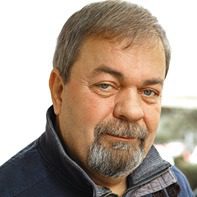
Tomasz Gilewski
Hello, my name is Tomasz Gilewski. I am the founder of PLCspace, author of books on the S7-1200 controller and HMI panels (i.e. Siemens hardware). I have been programming exclusively on Siemens hardware and engineering tools for several years.
Why Siemens?
- My first project in 2007 was an intersection traffic light based on the LOGO! Programmable Logic Relay. While learning the fundamental principles of the hardware and interface, I noticed the simplicity, intuitiveness and speed of integration for various SIMATIC systems. I noticed deficiencies in the form of functionality when working on controllers from other manufacturers.
- It is well known that Siemens automation equipment is robust and durable. Proof of this can be found in the PLCs of the SIMATIC S5 family from the 1980s, which many factories are still using today. P
 
In my 14 years of work, I have learnt every checkbox and what it is used for.
 STEP5, STEP7, MicroWin, LogoSoft Comfort, Starter, WinCC flexible, TIA Portal were the most popular Siemens software. I have gained experience by taking
- participation as a programmer, or more like a software engineer, in around 50 application projects for industries such as food, construction, automotiv, texyl, among others.
- Some of these applications were prototypes.I had to adapt to constant changes in design assumptions , which is quite a difficult task for a programmer. Another challenge was
- implementation of multiple software modifications to already running applications, i.e. the need to analyse the programme code after another programmer.
- I have spent very many hours looking for solutions to problems, parameterisation of various functionalities
Education itself.
 
New versions of engineering tools, firmware and hardware are released periodically. To keep up to date, I participate
- in on-site training at Siemens and its distribution companies
(a) LOGO!
(b) basic and advanced training in SIMATIC S7-300
(c) basic and advanced training in SIMATIC S7-1200
(d) safety training with SIMATIC S7-1500F
(e) visualisation training
- in numerous on-site and online workshops organised by Siemens related to SIMATIC systems.
- reading manuals
Helping others
I have decided to help and share my knowledge and experience with others , especially with those who are taking their first steps in programming. I want to make it easier for them to get to know this world. That is why
- since 2014, I have been running a blog located at s7-scl.pl where I describe various interesting topics about SIMATIC systems
- in 2015, my first book on the basics of S7-1200 programming in SCL language was published
- In later years I wrote several other books on
a)S7-1200 programming in LAD language
b) visualisation on a SIMATIC HMI panel
Provision of classroom training
I am currently active within the PLCspace company, where, in addition to programming work for new applications or upgrades to existing applications, I am involved in providing classroom training in many cities in Poland (Warsaw, Gdansk, Poznan, Krakow) as well as directly at company headquarters for their employees. Training topics include:
a)programming of SIMATIC S5, S7 systems in any programming language
(b)visualisation, i.e. human-machine interface on HMI basic and comfort panels
(c)diagnostics, i.e. everything maintenance staff need to know to keep machines and lines working properly. If a fault occurs, you will find the cause of the downtime in the shortest possible time
(d) communications, where exercises take place to exchange data over the various communication network standards used in industry
e) safety, which translates as machine and process safety. This training covers the most important standards a programmer should know, as well as the configuration of fail-safe hardware and the exercise of safety functions for handling components (e.g. Safety Mushroom).
f)drive engineering where exercises on parameterisation of frequency converters for motor control are conducted
Training is based on Factory IO
- actual mini lines and have several levels of sophistication.
Video courses
I am the author of several video training courses on:
- s5, s7-300/400 s7-1200/1500 controller programming
- visualisation for the Basic and Comfort panels
- diagnosis of classic systems such as the s7-300/400 and new systems such as the s7-1200/1500
- communication based on the new s7-1200/1500 controllers
- safety using SIMATIC S7-1200F
- Drive technology based on MICROMASTER and SIMATIC V20 frequency converters

TIA Portal software

Totally integrated automation is a development environment that combines PLC (programming), HMI(visualisation) and startdrive(drive technology).

The software comes in two versions:
 
  • basic -> allows programming of S7-1200 family PLCs
  • professional -> allows programming of all CPUs supported by the development environment
It is the successor to the SIMATIC Manager package, which has been well-known since the 1990s.
This allows you to effectively and efficiently create designs for control systems in industrial applications. Key features include:
  • drag & drop functionality for symbols, variables, devices
  • readability and intuitiveness of editors
  • intelligent interface for the automation programmer
  • common symbology and data for each device in the project
  • online diagnostics and testing
It is an intuitive programme, easy to learn and trivial to use while working. It provides the highest level of productivity for the engineer. The TIA Portal tool has been developed by Siemens thanks to its many years of experience in designing industrial automation softwares.

CPU S7-1200

The new controller, which has been developed as a successor to the S7-200, is characterised by slightly weaker parameters than the S7-300 family. Several CPU versions present in the family allow selection according to project requirements.

Key benefits:

  • modular construction The CPU can be expanded with additional I/O, communication and technology modules

  • built-in technological functionsoptimised for regulation, weighing, high-speed counters, telemetry, identification
  • modern programming with new functionalities communication integrated PROFINET (also PROFIsafe version F) and Modbus TCP-IP, PROFIBUS processors, serial (RS232, RS422/485)
  • data security access protection, copy protection, access levels
  • built-in diagnostics diagnostic messages displayed on the TIA Portal, the embedded Web server, the SIMATIC application and the HMI
  • Customer benefits - Proven in many industrial applications- Long-term availability and compatibility- Prepared for use in harsh environments- Modular, easily expandable, scalable
  • Scope of application - Control using central and distributed I/O - Technological tasks

The SIMATIC S7-1200 is a modular microsystem for low and medium performance applications. The central processing unit (CPU) contains the operating system and the user program. The user programme is located in load memory and is immune to power failure. The execution-relevant parts of the user programme in working memory with fast access are processed. The user programme can be transferred to the CPU using a memory card (MC) - as an alternative to transfer via an online connection to the PG programmer. The memory card can also be used as external loading memory or for software (firmware) updates. Connections to the process (object signals) are realised by on-board (built-in) inputs and outputs, the number of which depends on the processor version (the higher the model the more of them there are). The on-board inputs and outputs are specifically designed to support integrated high-speed counters (HSC). The operating system (firmware) additionally includes pulse-width modulated output pulse generators, as well as technology objects for controlling stepper motors. Expansion of the central unit can be realised by means of:

  • signal boards (SB) can be used to extend the built-in inputs and outputs.
  • signal modules (SM), these are available in digital and analogue signal versions.

Factory IO

Typical machine scenarios can be run in Factory IO, and the virtual factory connects to the SIM PLC simulator (or the actual PLC. Programming of the controller is possible in the programming environment (depending on the PLC family), and insight into its operation is available during the online connection

The general idea is to collect input data from the machine via the Factory IO program, which is then sent to the PLC. The program in the PLC is then executed and the results (output states) are sent back to Factory IO, which allows actuators(e.g. motors, actuators) to be started. The entire process is monitored in real time by you, allowing you to visualise how well the machine is performing.

  • Factory IO by Real Games is a useful tool for learning PLC programming through factory simulations. It is ideal for participants of the Siemens S7-1200 PLC programming course, as it allows them to practise their skills in a safe environment.
  • With Factory IO, it is possible to simulate various scenarios related to production processes, such as an assembly line, a transport line and many others. The tool also allows the visualisation of the operation of industrial machines and equipment, making it easier to understand the processes taking place in the factory.
  • During the Siemens PLC programming course, participants will have the opportunity to use Factory IO to consolidate their PLC programming knowledge and skills. Through simulations, the trainee will be able to practically apply their knowledge, test different scenarios and solve problems, allowing for more effective and practical teaching.
  • Using Factory IO during a Siemens PLC programming course is an ideal way to develop skills in a safe simulation environment, which will prepare participants to put their knowledge into practice in real industrial projects.

Search on